Agentic AI: From Assistants to Autonomous Agents (AAAS)
Generative AI chats. Agentic AI does. That single distinction explains where business software is heading — and why we built PAPS AI the way we did.
From prompts to goals
A generative assistant waits for a prompt, produces text and stops. Useful, but passive: you still turn words into actions. An agentic system pursues a goal:
"Fill my calendar with qualified meetings."
It searches the database, enriches the profiles, launches the sequences, answers the replies, books the slots and logs everything — deciding each next step itself, within the rules you set.
The evolution
- Chatbots answered questions
- Copilots drafted alongside you
- Agents own outcomes end to end
Architecture is the difference
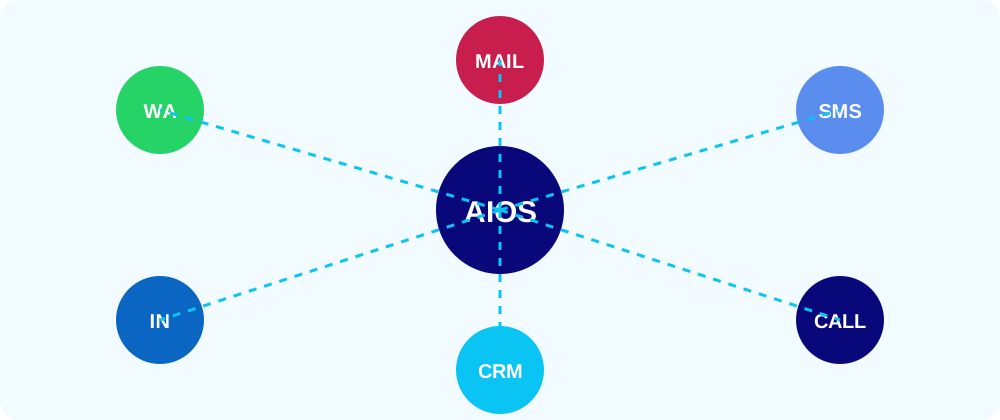
Agents need a closed loop with one shared memory. That is our AIOS: prospecting, enrichment, engagement, CRM, proposals and forecasting operating as one brain — with zero hallucinations, because the AI acts only within your parameters.
The business model that follows
You do not buy seats and do the work; you subscribe to the outcome: pipelines that fill, front desks that answer, follow-ups that never slip. Software you use is becoming staff you employ.
Every week an agent runs, it learns your business a little better. The advantage compounds.